
Do You Need a Permit for a Deck in Utah?
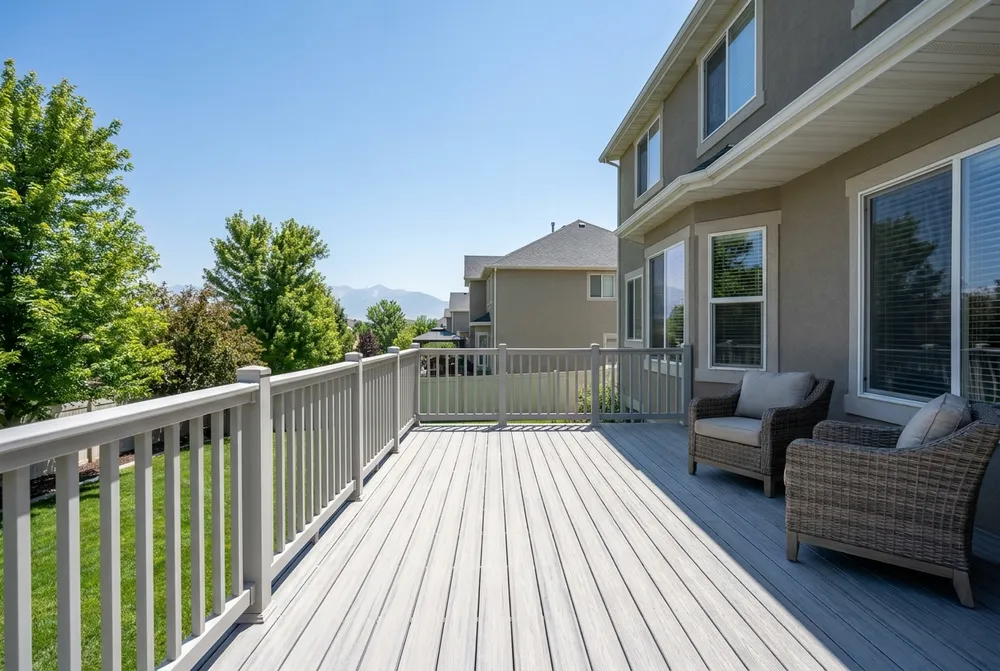
Yes, almost every deck in Utah needs a permit. State code requires one for any deck attached to the house. It also requires one for any deck built more than 30 inches above grade. Those are the two conditions nearly every Trex or composite deck meets. Layton and Kaysville both apply that rule. Each city also adds its own footing and wind-load rules on top of it, and checks every number before it signs off on the permit.
Do you need a permit for a deck in Utah?
Utah has adopted the 2021 International Residential Code, with state amendments, under Utah Code Title 15A. Every city and county building department in the state has to enforce that code. A city can add stricter rules on top, but it cannot go below the state floor.
Under that code, a deck skips the permit only if it meets three conditions at once. It must stay 30 inches or less above grade everywhere. It must not need a guard rail. It must not serve a required exit door. Miss any one of those three, and the deck needs a permit. An attached deck almost always fails the first condition by itself, since it sits right on the house.
Permit fees across Utah are based on the deck's value, so the fee depends on the size and cost of the deck. For a typical deck project valued around $5,000 to $15,000, expect a fee in the $100 to $300 range. That is a general estimate, not a promise. Your city sets its own fee schedule. Your written estimate should show the real number before you sign anything. Call for a free written estimate that spells out the permit cost up front.
What does a Utah deck permit actually check?
A permit is not just paperwork. The review checks the footing depth against the local frost line. It checks the ledger board and post connections against the city's wind and seismic rules. It checks the guard rail height and gap spacing against code. An inspector confirms each of those in person, at the footing stage and again at final inspection, before the deck is considered done.
That review protects the part of the deck you cannot see once it is finished. A shallow footing or a weak ledger connection can look fine on day one. It can fail years later, under snow load or a hard wind gust. The permit process is what catches that early.
How does the permit process work in Layton and Kaysville?
Both cities apply the statewide 30-inch/attached rule. Each one then layers its own design rules on top.
Layton. The city requires a permit for any deck attached to the home or built 30 inches or more above grade. Any deck or landing over that 30-inch line needs a guard rail at least 36 inches tall, with no gap wider than 4 inches. Layton's design rules also set a 30-inch minimum frost depth for footings. They set a 43 psf ground snow load and a 115 mph basic wind speed too, under Seismic Design Category D-2. Every one of those numbers gets checked at plan review and inspection.
Kaysville. Permits here go through the city's own Community Development Building Department, not Davis County. Plans are submitted through the City Inspect online portal. Review typically takes about two weeks. Kaysville's design rules set the same 30-inch minimum frost depth for footings. They set a stronger 140 mph basic wind speed, Seismic Design Category D2, and a 40 psf live load just for decks and balconies. A Kaysville deck's ledger and post hardware has to be built for that load before the city issues the permit.
Two cities, one statewide floor, two real sets of local numbers layered on top. A deck plan built for a milder state does not automatically pass here. A written estimate for a Layton or Kaysville deck should already account for the local footing depth and hardware, not treat it as a surprise add-on.
What happens if you build a deck without a permit?
Skipping the permit skips the inspection. Nobody checks the footing depth. Nobody checks the ledger connection or the guard rail before the deck is in daily use. An unpermitted deck can also come up during a home sale, when a buyer's inspector or the city itself flags work that was never signed off. Fixing it after the fact costs far more than pulling the permit up front. That often means tearing back decking just to expose a footing or a ledger connection for a late inspection.
Construction Solutions of Utah pulls the permit for every deck project and manages the inspections. The paperwork and the code checks are handled before the crew ever starts digging footings. You see the real plan, the real permit cost, and the real price in writing before you commit. The company is licensed in Utah, number 14241087-5501, and insured.
Contact Construction Solutions of Utah for a free, written estimate on your Trex or composite deck, permit included.
Construction Solutions of Utah pulls and manages the deck permit itself, so the code checks are handled before the crew digs footings. Family owned, veteran owned, and based in Bountiful, UT, the crew builds Trex and composite decks across the Wasatch Front, from Layton's frost-depth and wind rules to Kaysville's own building department review. See what a Trex or composite deck costs in Utah for the build-cost side of the project.
Talk to Construction Solutions of Utah
Questions about your general contractor & remodeling job? We serve Bountiful and the surrounding area with honest, upfront advice.
Related articles
FAQ
Related questions
How tall can a deck be in Utah without a permit?
Up to 30 inches above grade, and only if it also skips a guard rail and does not serve a required exit door. A deck that clears any one of those three conditions needs a permit. Almost every attached Trex or composite deck fails the exemption on the first condition alone, since it sits on the house.
What size guard rail does a Utah deck need?
In Layton, any deck or landing more than 30 inches above grade needs a guard rail at least 36 inches tall, with no gap wider than 4 inches. That height and gap spacing get checked at inspection, not left to preference.
Which city office issues the permit for a Kaysville deck?
Kaysville's own Community Development Building Department, not Davis County, issues the permit. Plans go in through the City Inspect online portal, and review runs about two weeks.
How deep do Utah deck footings have to go?
In both Layton and Kaysville, footings have to reach a 30-inch frost depth. That number comes from each city's own adopted design criteria, and an inspector checks it at the footing inspection before framing starts.